
Overview
Bhutan is rightly celebrated as the Last Shangri-La—a Himalayan kingdom where ancient wisdom continues to shape everyday life. Cradled by the mighty Himalayas and protected for centuries from outside influence, this mystical land has preserved its culture, spirituality, and traditions in remarkable purity. Deeply rooted in the Drukpa Kagyu school of Mahayana Buddhism, Bhutan’s heritage reflects a profound respect for nature, compassion, and mindful living. Through a conscious choice of self-imposed isolation, the Bhutanese people have safeguarded a way of life centered on harmony, balance, and inner peace.
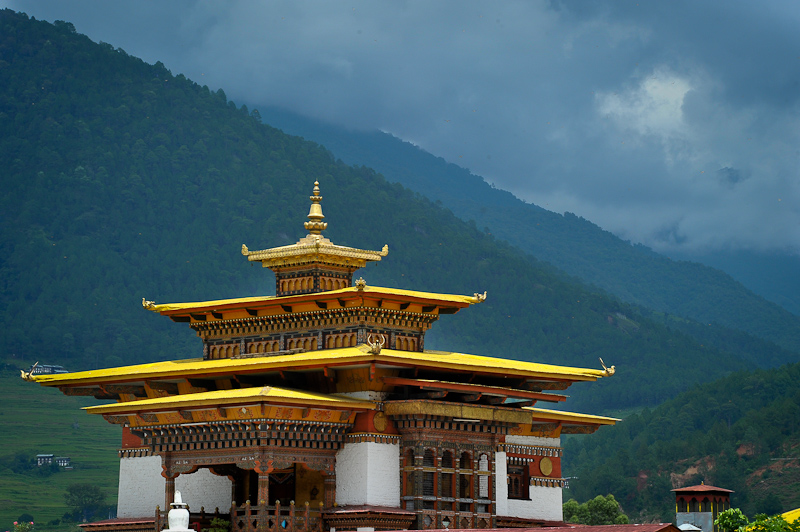
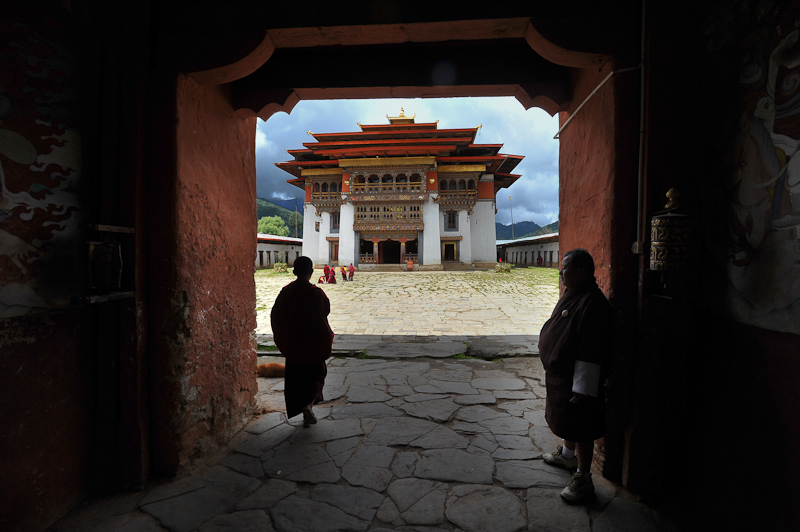
A land of rolling valleys and soaring peaks, Bhutan unfolds like a living canvas. Towering mountains rise above pristine forests rich with rare flora and fauna, while crisp mountain air, prayer flags fluttering on high passes, and striking traditional architecture create scenes of quiet wonder. Majestic dzongs (fortress-monasteries), ancient temples, monasteries, and whitewashed stupas punctuate the landscape, offering endless opportunities for compelling compositions. From cascading waterfalls and glacial rivers to warm, genuine smiles of the local people, every moment tells a story waiting to be captured.
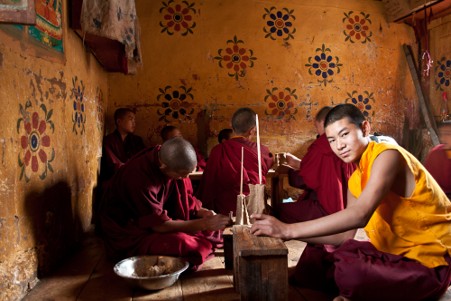
A photography tour through Bhutan is an immersive visual journey through its soul. Capture the vibrant energy of Thimphu’s bustling markets, the serene beauty of the Phobjikha Valley, dramatic Himalayan vistas, sacred rituals, and timeless village life. Whether framing monks in prayer, mist drifting through pine forests, or golden light illuminating centuries-old monasteries, Bhutan offers extraordinary moments for photographers of all levels. Guided by the philosophy of Gross National Happiness, this is not just a destination to photograph—but an experience to feel, reflect upon, and remember long after the journey ends.
Itinerary
Day 01: Arrive Paro & transfer to Thimphu
The flight to Paro stands as one of the most breathtaking experiences in the entire Himalayan region. This journey treats you to captivating vistas and an exhilarating descent into the Kingdom of Bhutan. As you step off the aircraft, Bhutan’s first welcome gift to you is the refreshingly cool and pristine mountain air.
Once you’ve completed immigration procedures and collected your luggage, our representative will extend a warm welcome, presenting you with a traditional ‘tashi khaddar’ – a white scarf symbolizing an auspicious reception for guests.
Following this heartfelt greeting, you will embark on a road journey to Thimphu, Bhutan’s capital town. The road takes you through the picturesque Paro valley, eventually leading to the convergence of the Paro and Thimphu rivers at a place called Chuzom.
Approaching Chuzom, you’ll spot Tachog Lhakhang on your left. This temple, built by Thangtong Gyalpo, a pioneering engineer who introduced suspension bridge construction to Bhutan and Tibet (some still in use today), is a fascinating sight. Crossing this iron bridge is a delightful experience, offering a roundtrip walk lasting approximately 50 minutes. Upon reaching Thimphu, check-in to your hotel.
Thimphu, Bhutan’s capital city, serves as the nexus of government, religion, and commerce. It’s a city that beautifully blends modern development with ancient traditions, making it perhaps the world’s only capital without a traffic light.
Evening photography focuses on Thimphu’s key landmarks glowing after dusk, including Trashichhodzong, the National Memorial Chorten, the illuminated Buddha Dordenma, historic Changangkha Lhakhang, and the lively Ka Ja Throm market area. Overnight at the hotel in Thimphu. (Altitude 2,320m)
Day 02: Thimphu
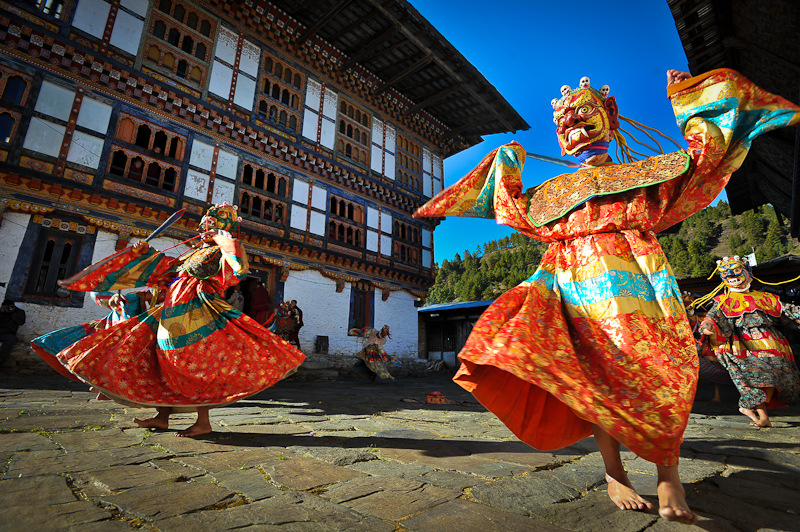
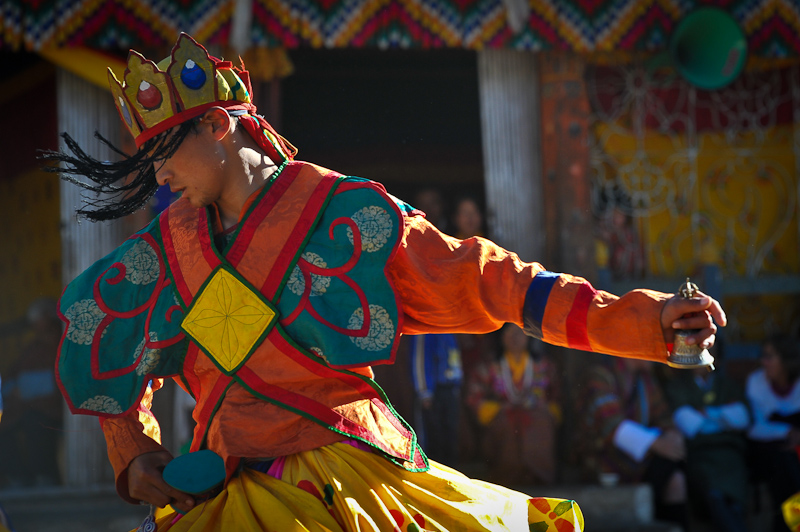
After breakfast, attend the spectacular Thimphu Tshechu, one of Bhutan’s most significant religious festivals. Instituted in 1867 by Gyalse Tenzin Rabgay and later enriched in the 1950s by the Third King, Jigme Dorji Wangchuck, the festival honours Guru Rinpoche (Padmasambhava), who introduced Buddhism to Bhutan in the 8th century. Monks and lay performers present sacred masked dances (Boed Chhams), many dating back to medieval times, depicting Buddhist teachings and the triumph of good over evil. Witnessing these rituals is believed to bestow blessings, while the gathering itself offers a vibrant celebration of faith, culture, and community.
Later embark on a brief drive to reach Buddha Dordenma, situated atop a hill within the serene Kuenselphodrang Nature Park. This remarkable statue brings to life an ancient prophecy originating from the 8th century A.D., which was unearthed by Terton Pema Lingpa, a discoverer of religious treasures. It is believed that this statue emits an aura of tranquillity and joy, extending its influence to the entire world. Crafted from bronze and adorned with a layer of golden gilding, this colossal Shakyamuni statue stands at a towering height of 51.5 meters, solidifying its position as one of Bhutan’s largest statues. Within the Buddha Dordenma statue itself, an astonishing 125,000 smaller Buddha statues, also cast in bronze and gilded, have been meticulously arranged.
Continue onto to Takin Preserve, more commonly referred to as the Motithang Zoo. This sanctuary is dedicated to the conservation of the Takin, Bhutan’s national animal, a highly uncommon mammal belonging to the ovine-carpine family. Followed by visit and photography session at Zilukha Nunnery, a peaceful Buddhist retreat It serves as a religious and educational centre for Buddhist nuns, where they study scriptures, practice meditation, and take part in daily prayers. Surrounded by beautiful hills and traditional Bhutanese architecture, the nunnery reflects the country’s rich spiritual culture and dedication to preserving Buddhist traditions.
Before returning to your hotel, visit the Local Craft Bazaar, a charming traditional marketplace where artisans display woven textiles, thangka paintings, wood carvings, bamboo crafts, jewellery, and handmade paper—an ideal place to experience Bhutanese artistry and support local livelihoods. Overnight in Thimphu (Altitude 2,320m).
Day 03: Thimphu – Gangtey (150km, approx. 5 hour drive)
Begin the day once again witnessing the vibrant Thimphu Tshechu, immersing yourself in its sacred masked dances and spiritual atmosphere.
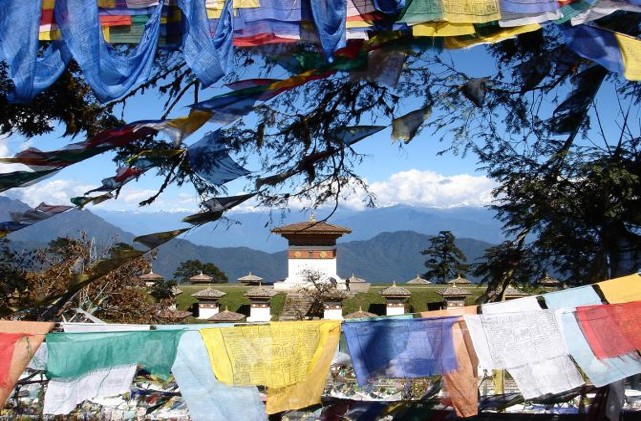
Then commence your journey to Gangtey, driving across across Dochu-la pass, situated at an elevation of 3,088 meters (approximately 10,130 feet). Pause briefly at this point to soak in the magnificent scenery and appreciate the chorten, mani wall, and prayer flags that adorn this high-altitude location. If the skies are clear, you’ll have the opportunity to behold a panoramic view of the following peaks from left to right: Masagang (7,158m), Tsendagang (6,960m), Terigang (7,060m), Jejegangphugang (7,158m), Kangphugang (7,170m), Zongphugang (7,060m), which resembles a table mountain and presides over the remote region of Lunana, and finally, Gangkar Puensum, the loftiest peak in Bhutan, soaring to an impressive 7,570 meters.
At Dochula Pass, a collection of 108 chortens or stupas, known as Druk Wangyal Chortens, was commissioned by Ashi Dorji Wangmo Wangchuk, the eldest Queen Mother. These chortens are structured in three tiers: the first and lowest level contains forty-five chortens, the second tier has thirty-six, and the top tier includes twenty-seven, encircling the central main chorten.
Prayer Flag Hoisting near Dochula pass:
Prayer flags are an iconic and deeply spiritual element of Bhutan’s landscape, reflecting the country’s rich cultural and religious heritage. Found across the kingdom—in monasteries, dzongs, chortens, homes, mountain passes, and along rivers and bridges—these vibrant flags add a striking spectrum of colour to Bhutan’s rugged and serene surroundings. Traditionally printed in five colours—blue, white, red, green, and yellow—each flag represents the five elements of nature: sky, air, fire, water, and earth. Beyond their visual beauty, prayer flags hold profound spiritual significance. Bhutanese people believe that with every flutter in the wind, the prayers and mantras inscribed on the flags are carried across the land, spreading peace, compassion, and positive energy to all beings.
Drive further onto Gangtey, en route stopping at Rinchengang village, which sits atop a hill opposite the Wangduephodrang Dzong, just above the West-East national highway. The village’s unique charm lies in its traditional mud houses, clustered together with an ancient allure that distinguishes it from other Bhutanese villages. Rinchengang boasts a close-knit community, and according to local legends, its early settlers were recruited by the revered saint Zhabdrung Ngawang Namgyal in the early 17th century from Cooch Bihar in India, initially as skilled construction laborers for the Wangdue Dzong’s construction. Their exceptional craftsmanship in stone masonry contributed significantly to the dzong’s completion, earning them a permanent settlement in this village. Rinchengang is considered one of Bhutan’s oldest villages, and it still preserves its time-honoured customs and traditions. Surrounded by terraced rice fields, the village is a delightful 15-minute walk from the highway, offering a splendid view of Wangduephodang Dzong and the meandering Punatsang Chhu river.
Your next stop is Wangduephodrang Dzong. Founded by Zhabdrung Ngawang Namgyal in 1638, on the top of high ridge between Punak Tsang Chhu and Dang Chhu rivers, offering fantastic of the valley below, Wangdue Dzong holds special place in Bhutan’s history. The strategic location of the dzong, provided Penlop (Governor) of Wangduephodrang, chance to protect the routes to Trongsa, Punakha, Dagana and Thimphu making him the third most powerful ruler after Governors of Paro and Trongsa. The Dzong had been damaged by fire in 2012 and restored to its original grandeur and splendour recently (in 2022).
Continue onto Gangtey. The valley of Gangtey is one of the most beautiful and unspoiled places in Bhutan. The surprise of finding such a wide, flat valley without any trees after the hard climb through dense forests is augmented by an impression of vast space and is an extremely rare experience in Bhutan where most of the valleys are tightly enclosed. Overnight at the hotel in Gangtey (Altitude 3,000m).
Day 04: Gangtey
Following breakfast, witness Gangtey Tshechu (festival). Guru Padmasambhava also known as Guru Rinpoche is considered as Second Buddha in Bhutan. And the Nyingma traditions is the four major schools of Tibetan Buddhism while Pema Lingpa is the second most important saint / Guru in Nyingma tradition after Guru Rinpoche because of his contribution in spreading Buddhism, in Bhutan. During his visit to Gangtey to teach Buddhism to people of Phobjikha valley and Gangtey, Pema Lingpa (who is considered as reincarnation of Guru Rinpoche) having impressed by majestic mountains of the valley had foretold that one of his descendants would build a monastery on hilltop and make it famous as the seat of Peling tradition. This prediction fructified when Gangtey monastery was built by his grandson, Gyalse Pema Thinely, in 1613 which is now the main seat of Pema Lingpa tradition. Perched on a hillock on one of Bhutan’s most scenic and picturesque valley, Gangtey Monastery is now the most important monasteries in the country of Peling tradition.
Annual Gangtey Tshechu, a three day religious event, is celebrated at large courtyard of this famous Gangtey Goenpa (monastery) to commemorate Guru Rinpoche’s birth and include various sacred mask dances those are based on Peling tradition and some of them are unique to Gangtey. In between mask dances, there are also folk songs & traditional performances, and the celebration concludes with Nguedup Langwa, a spiritual blessing for wisdom and power.
Explore Gangtey Goempa (monastery), also the venue of festival. Perched on a small hill that rises from the valley floor, the Gangtey Monastery is the only Nyingmapa monastery on the western side of the Black Mountain’s and also the biggest Nyingmapa monastery in Bhutan. The Monastery is surrounded by a large village inhabited mainly by the families of the 140 Gomchens who take care of the Monastery. Gangtey was founded by Pema Trinley, the grandson of Pema Lingpa, the famous Nyingmapa saint of Bhutan. In 1613, Pema Trinley establish the monastery and became the first Gangtey Tulku. The religious traditions of Pema Lingpa still taught there.
Take a stroll in Gangtey Village, a tranquil Himalayan settlement overlooking the valley and centred around the historic Gangtey Monastery. With its whitewashed farmhouses, open meadows, and prayer flags dancing in the wind, the village offers an authentic glimpse into Bhutan’s timeless rural life.
Later during the day visit Gangtey Shedra, a Buddhist monastic school where monks study philosophy, logic, and sacred texts. Surrounded by tranquil landscapes, the Shedra plays a key role in preserving Bhutan’s religious and spiritual traditions.
And explore the Phobjikha Valley, famous as the winter sanctuary of the rare, black-necked cranes. The valley is beautifully shaped by two rivers—Nakay Chhu (Black Water) and Gay Chhu (White Water). Overnight in Gangtey (Altitude: 3,000m).
Day 05: Gangtey – Trongsa – Bumthang (153km, approx. 6-hour drive)
Morning after breakfast, once again witness Gangtey Tshechu (festival). Then drive onto Bumthang via Trongsa, promising a scenic drive through captivating landscapes.
En route to Trongsa, traverse the picturesque Pelela pass, standing tall at 3,300 meters, historically serving as the traditional demarcation between the eastern and western regions of Bhutan. Adorned with clusters of vibrant prayer flags fluttering in the wind, and blanketed by high-altitude dwarf bamboo, the pass provides a serene and mystical ambiance.
A notable stop along the way is the Chendbji Chorten, an exquisite stupa constructed in the 18th century by the revered Lama Shida. Exhibiting Nepalese architectural influences, the chorten is adorned with eyes painted at its four cardinal points, adding to its mystical allure.
Continuing the journey, arrive at Trongsa town, nestled on steep slopes overlooking a breathtaking river gorge. Serving as the pivotal nucleus of the nation, Trongsa holds historical significance as the launching point for endeavours aimed at unifying the country. Surrounded by awe-inspiring landscapes, Trongsa exuded a timeless charm that captivate our senses.
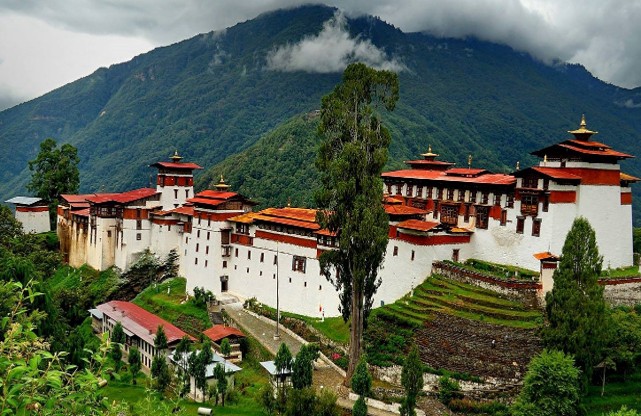
While in Trongsa, explore the majestic Trongsa Dzong, undoubtedly one of the most impressive fortresses in all of Bhutan. Constructed by Chogyal Minjur Tempa, an esteemed official dispatched by Zhabdrung to unify Eastern Bhutan, the dzong underwent significant expansion towards the end of the 17th century under the supervision of Desi Tenzin Rabgay. Trongsa Dzong holds a special place in Bhutanese history as the ancestral residence of the present Royal Family, with the first two hereditary kings ruling the nation from this very fortress.
Continue journey towards Bumthang, traversing the breathtaking Yutong-la pass at an elevation of 3,400 meters (11,155 feet). The road ascends steeply from Trongsa before descending through lush coniferous forests into the expansive Chumey valley, renowned for its fertile lands and picturesque landscapes.
En route, make a brief stop at Chumey, a valley characterized by its fertile soil where crops such as wheat, barley, potatoes, and buckwheat thrive. Notably, Chumey is celebrated for its renowned wool weaving tradition known as ‘Bumthang Yathra’, showcasing the exquisite craftsmanship of the local artisans. Overnight at the hotel in Bumthang (Altitude 3,000m).
Day 06: Bumthang (Altitude 3,000m)
Post breakfast, exploration starts with Jambay Lhakhang, the ancient temple built by Tibetan King Songtsen Gampo in 659 A.D. as part of a chain of 108 simultaneously constructed temples in order to subdue an evil demoness that lay over the Himalayan region.
Short distance from Jambay Lhakhang is the site of sacred Kurje Lhakhang comprising of three temples which are surrounded by 108 chorten walls. The first and the oldest structure of the three, was constructed on the rock where Guru Rinpoche meditated. The second building is also called the Sampa lhundrup temple and houses a colossal statue of Guru Rinpoche. The third building is known as Ka Gon Phur sum lhakhang dedicated to the happiness of all living beings in the kingdom.
Continue onto Tamshing Lhakhang, one of the oldest and most important Buddhist temples in Bhutan. Built in 1501 by the famous Buddhist saint Pema Lingpa, the temple is well known for its ancient wall paintings, sacred scriptures, and rich spiritual heritage. It remains an active centre of worship and centre of pilgrimage.
Also explore picturesquely located Jakar Dzong, overlooking Choekhor valley. According to legend, when the lamas assembled in about 1549 to select a site for a monastery, a big white bird rose suddenly in the air and settled on a spur of a hill. This was interpreted as an important omen, and the hill was chosen as the monastery’s site and for Jakar Dzong, which translates as ‘castle of the white bird’.
Later in the evening, witness Tangbi Mewang, a unique and vibrant fire festival. Held annually at the historic Tangbi Goemba, the festival is famous for its traditional fire blessing ceremony, where people pass under a flaming arch made of dry grass to receive purification and protection from evil spirits.
Overnight at the hotel in Bumthang (Altitude 3,000m).
Day 07: Bumthang (Full day excursion to Tang valley, 74km, approx. 3-hour round trip Journey). Terton (treasure discoverer) Pema Lingpa, the famous saint, was born in the pristine Tang valley (2,800m) which is one of the four fascinating Bumthang valleys so of great spiritual significance. The people of this valley primarily engaged in livestock rearing and agriculture mainly growing buckwheat, wheat, barley with potato and apples as their cash crops. En route a short walk on path lined with prayer flags to Membartsho (the burning lake) where Pema Linga said to have discovered several of Guru Rinpoche’s hidden treasures.
Explore Ogyen Choling Palace & Museum. Built in 1898 while its origin going to back to 14th century with the visit of the great Tibetan master of Buddhism, Longchen Rabjam (1308-63), a most celebrated writer and philosopher of the Nyingmapa School of Tibetan Buddhism, Ogyen Choling Palace is the most prominent site in Tang valley. Restored in 19th century, historically significant Ogyen Choling Palace is now housing the Family Museum, a place that transports visitors to another world and time. The visitors here see permanent exhibits recreated to capture the ambience of the lifestyle of the Trongsa Penelop (Governor) Tshokey Dorji and his household. It also serves as a retreat for those engaged in religious history. Bhutan’s history truly unfolds here.
Stroll around Tang Village, a peaceful and scenic village, surrounded by green hills, traditional farmhouses, and clear mountain streams, the village is known for its natural beauty and rich cultural heritage.
Blessing & Butter lamp lighting ceremony at a village monastery:
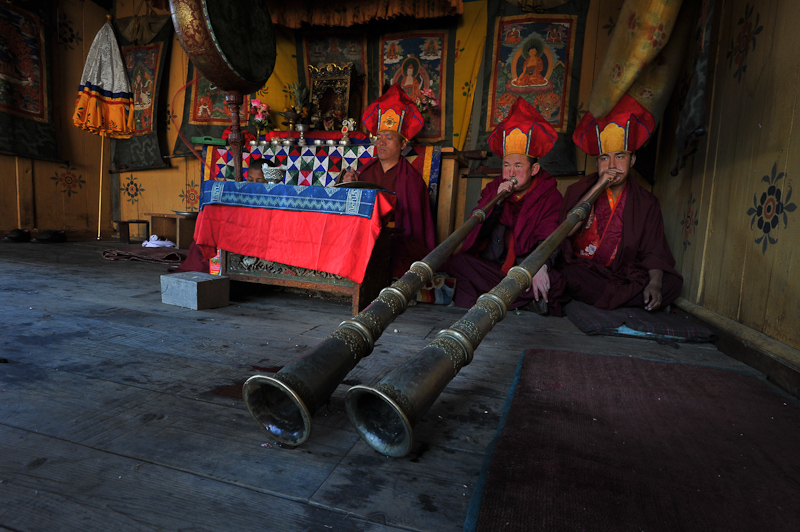
The traditional blessing and butter lamp ceremony in Bhutan is a sacred and deeply spiritual experience, reflecting the essence of the country’s Buddhist heritage. These ceremonies are commonly held in monasteries, temples, and other sacred sites, offering visitors a rare opportunity to witness and participate in Bhutan’s living spiritual traditions. During the blessing ritual, Buddhist monks in vibrant robes chant ancient prayers and powerful mantras, invoking the blessings of the Buddha and enlightened beings. The rhythmic recitations, accompanied by the soft sounds of ritual instruments, create a serene and meditative atmosphere that fosters inner peace, protection, and spiritual well-being. A central element of the ceremony is the lighting of butter lamps. Traditionally made from yak butter, these lamps symbolize the dispelling of darkness and ignorance, and the illumination of wisdom and clarity. The gentle, flickering glow represents the inner light that guides individuals on their path toward enlightenment and compassion. Overnight at the hotel in Bumthang (Altitude 3,000m).
Day 08: Bumthang – Punakha (215km, approx. 6.1/2-hour drive)
Following breakfast drive onto Punakha, en route making a several photo stops to capture amazing views. Once the capital of Bhutan and the seat of government until 1955, Punakha still serves as the winter residence of the Je Khenpo, the chief abbot. Nestled in a temperate climate and blessed with natural drainage from the Pho Chhu (male) and Mo Chhu (female) rivers, the fertile Punakha valley yields abundant crops and fruits.
Before check-into hotel enjoy a brief excursion to Chimi Lhakhang, also known as the temple of fertility. Perched on a hillock in the heart of the valley, this temple is renowned for the belief that couples struggling with infertility are blessed with children shortly after visiting and offering prayers here. The trail leads through rice fields to the quaint settlement of Pana, which means ‘field.’ Strolling through the village near the temple provides you with rare insights into the daily lives and lifestyles of the villagers.
Evening catch night view of Punakha Dzong when lights are on. The night view of Punakha Dzong is truly mesmerizing, with its majestic architecture beautifully illuminated by soft lights. The warm glow of the lights contrasts against the dark sky, highlighting the intricate details of the fortress and the serene flow of the Pho Chhu River. Conclude your day with an overnight stay at the hotel in Punakha, situated at an altitude of 1,300 meters.
Day 09: Punakha
Early morning embark on a sunrise hike to Khamsum Yulley Namgyal Chorten is a peaceful and memorable experience in Punakha Valley. The trail passes through lush rice fields, pine forests, and small villages before reaching the beautifully decorated chorten perched on a hilltop. As the sun rises over the valley, the golden light illuminates the surrounding mountains and river, creating breathtaking views and a calm spiritual atmosphere. The hike offers both natural beauty and a deeper connection to Bhutanese culture and Buddhism.
Later in the day, explore Punakha Dzong, the “Palace of Great Happiness,” constructed in 1637 at the confluence of the Pho Chhu and Mo Chhu rivers. This grand six-story fortress, crowned with a golden tower, houses courtyards, temples, and religious sculptures, offering a deep insight into Bhutanese history, spirituality, and architectural mastery.
Evening a farmhouse visit in Punakha offers a wonderful opportunity to experience traditional Bhutanese village life and hospitality. One can explore traditional wooden houses, observe local farming practices, and enjoy authentic homemade Bhutanese cuisine prepared with fresh local ingredients. Surrounded by green rice fields and peaceful countryside scenery, the experience provides insight into the daily lifestyle, customs, and culture of rural Bhutan. Overnight at the hotel in Punakha (Altitude 1,300m).
Day 10: Punakha – Paro (125km, approx. 4-hour drive)
Following an early breakfast, drive back to Paro. Paro is a stunning valley steeped in rich culture and surrounded by breathtaking natural beauty. It hosts some of Bhutan’s oldest temples, monasteries, the National Museum, and the country’s sole international airport. To the north, Mount Chomolhari (7,314 meters) stands majestically in pristine white, while its glacial waters cascade through deep gorges to form the Paro River, known locally for its fertile terraced fields that yield the famous red rice.
Visit Ta Dzong, originally a Watchtower and now home to the National Museum. The museum’s extensive collection includes antique thangkha paintings, textiles, weaponry, household artifacts, and a diverse array of natural and historical treasures.
Then a hike to Zuri Dzong offers a perfect blend of history, nature, and photography opportunities. The trail passes through pine forests and peaceful hillside paths, leading to one of Bhutan’s oldest fortresses with breathtaking panoramic views of the valley below. The hike provides excellent chances to capture traditional Bhutanese architecture, dramatic mountain landscapes, colorful prayer flags, and beautiful lighting during sunset. Overnight at the hotel in Paro (Altitude 2,280m).
Day 11: Paro
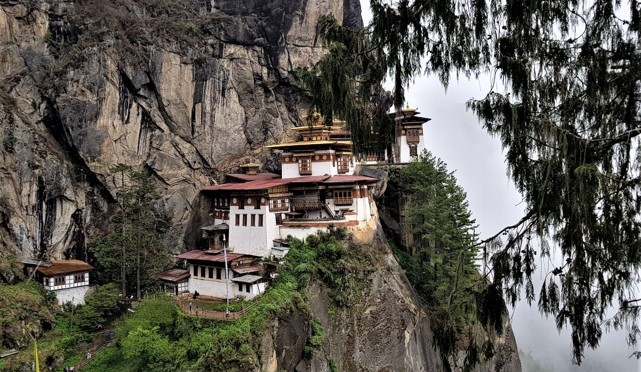
Following breakfast, embark on a captivating journey to Taktshang Monastery, also known as Tiger’s Nest, which involves approximately a 5-hour round-trip hike. This monastery holds a position of utmost prominence among Bhutan’s monastic institutions, clinging to the side of a cliff at an elevation of 900 meters above the Paro valley floor. Legend has it that Guru Rinpoche arrived at this sacred site on the back of a tigress and engaged in meditation, hence earning it the name ‘Tiger’s Nest.’ Recognized as one of the most sanctified places in Bhutan, it was visited by Zhabdrung Ngawang Namgyal in 1646 and is now a pilgrimage site frequented by all Bhutanese at least once in their lifetime.
Later in the afternoon take a stroll around Paro main street and also explore Ka Ja Throm. Located beside the Ugyen Pelri Palace grounds, Ka Ja Throm Market in Paro is a vibrant hub of local commerce and culture in Bhutan. Nestled in the middle of picturesque town, this bustling market space offers a rich tapestry of traditional Bhutanese life, where visitors can immerse themselves in the sights, sounds, and flavors of the region. It’s a delightful community space where vendors can showcase and sell their produce in a colourful community space. Local vendors, with their warm hospitality, provide a glimpse into Bhutan’s heritage and daily life, making Ka Ja Throm not just a place to shop, but a cultural experience that highlights the country’s emphasis on community and tradition.
Then witness photograph a Traditional Cultural program, organized exclusively at a Village farmhouse.
Traditional Bhutanese cultural programs offer a vibrant and captivating glimpse into the kingdom’s rich heritage and deeply rooted traditions. These performances are a cherished expression of Bhutan’s living culture, thoughtfully preserved and shared with both locals and visitors. Dancers, elegantly adorned in colourful traditional attire, bring to life stories inspired by mythology, folklore, and everyday Bhutanese life. Their graceful movements are accompanied by the enchanting sounds of traditional instruments such as the dramnyen (Bhutanese lute), flute, and drums. The intricate choreography and rhythmic patterns often symbolize spiritual values, harmony with nature, and the timeless wisdom of Bhutanese beliefs, transporting audiences to a world steeped in history and meaning.
For this special session, wear Bhutanese national dress along with locals:
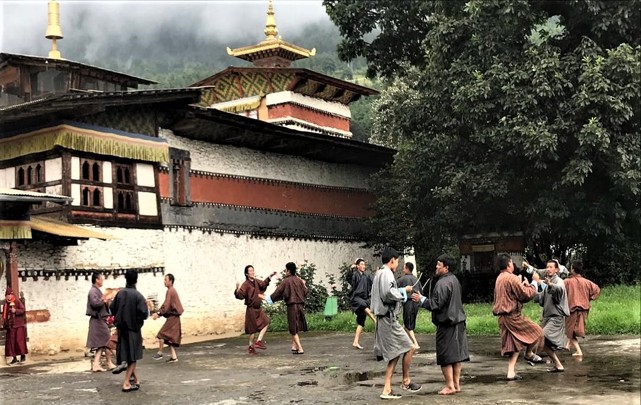
The Bhutanese national dress—Gho for men and Kira for women—is a timeless symbol of the country’s rich cultural identity and deeply rooted traditions. Worn with pride in daily life as well as on formal occasions, these garments reflect Bhutan’s strong commitment to preserving its heritage. The Gho is a knee-length robe tied at the waist with a belt known as a kera, creating a distinctive and practical silhouette. It is traditionally paired with knee-high socks and leather shoes, and often complemented by a handwoven ceremonial scarf called a Kabney, which signifies the wearer’s rank or social status. The Kira, on the other hand, is an elegant ankle-length dress made from finely woven textiles, secured at the shoulders with ornate brooches. It is worn over a silk blouse known as a Wonju and often accompanied by a beautifully embroidered jacket called a Toego. A decorative scarf known as a Rachu is gracefully draped over the shoulder, adding to its refined appearance. Overnight at the hotel in Paro (Altitude 2,280m).
Day 12: Departure
After breakfast, bid farewell to the Kingdom of Bhutan as you transfer to Paro International Airport for your onward flight. Enjoy the final glimpses of the serene Paro Valley, with its emerald fields and prayer-flag-strewn hills, as your unforgettable Himalayan journey comes to a close. Depart with cherished memories of Bhutan’s majestic landscapes, sacred monasteries, and warm-hearted hospitality, carrying the spirit of the Land of the Thunder Dragon with you.